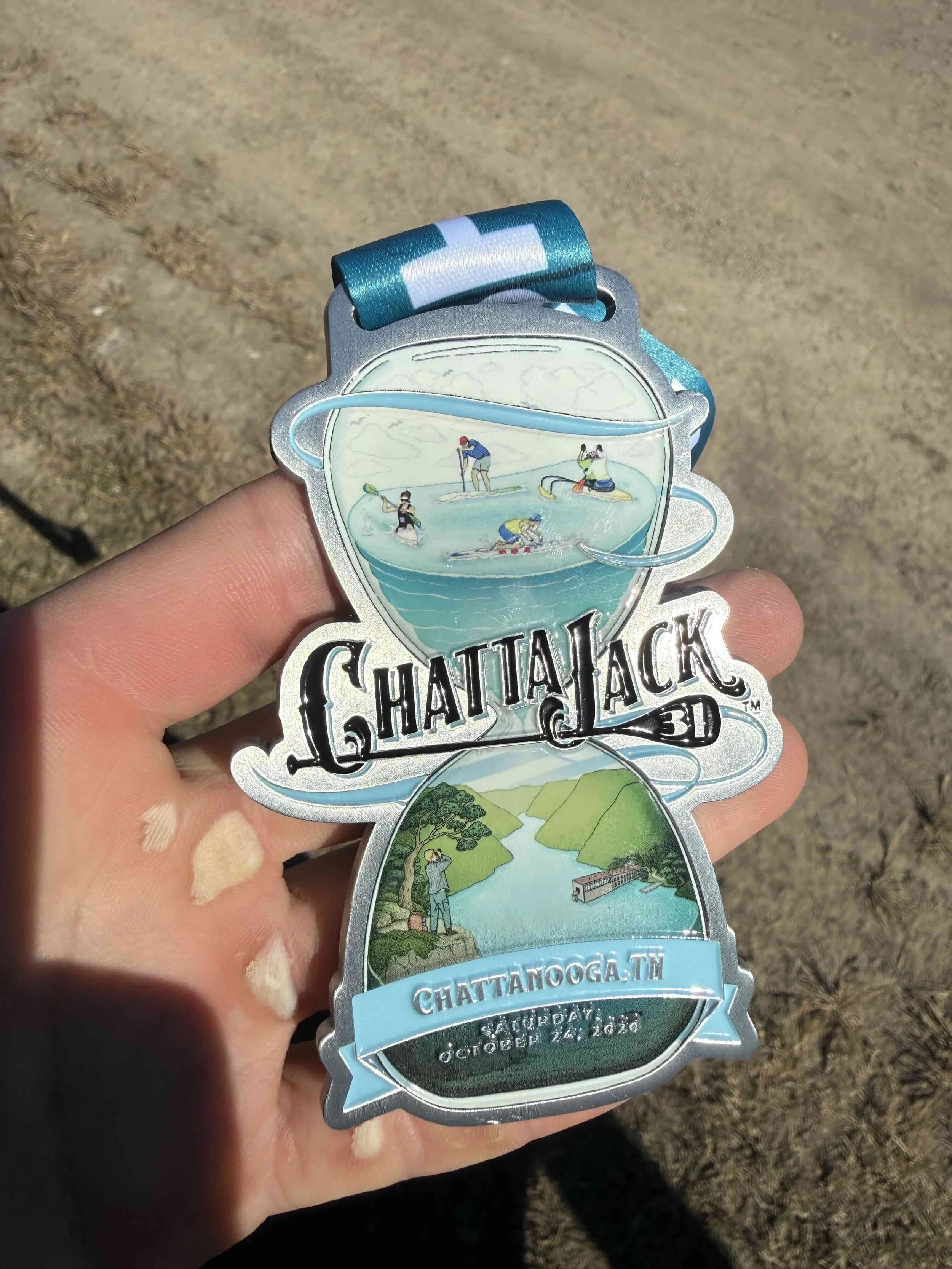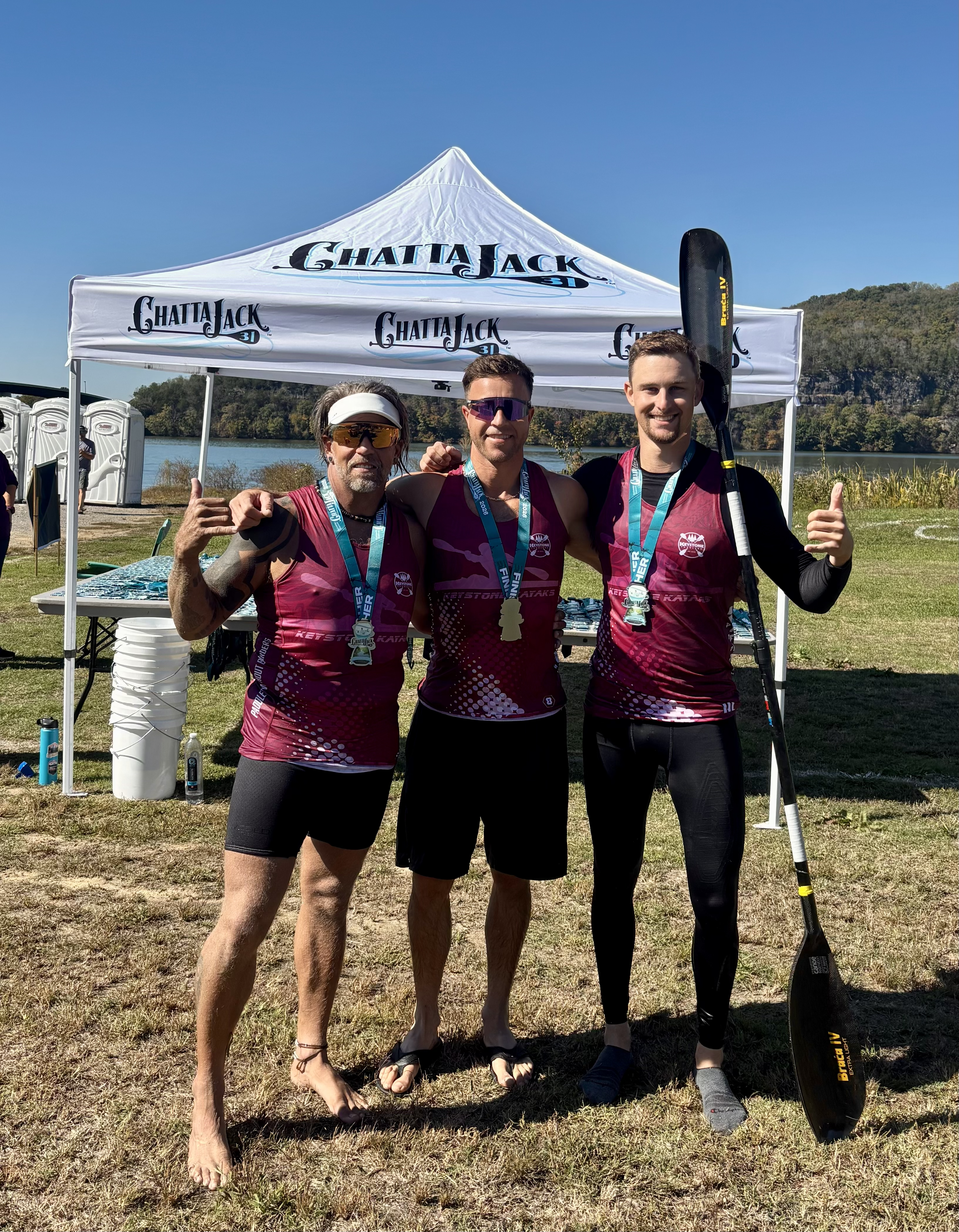
Chattajack 31 — Doing More With Less
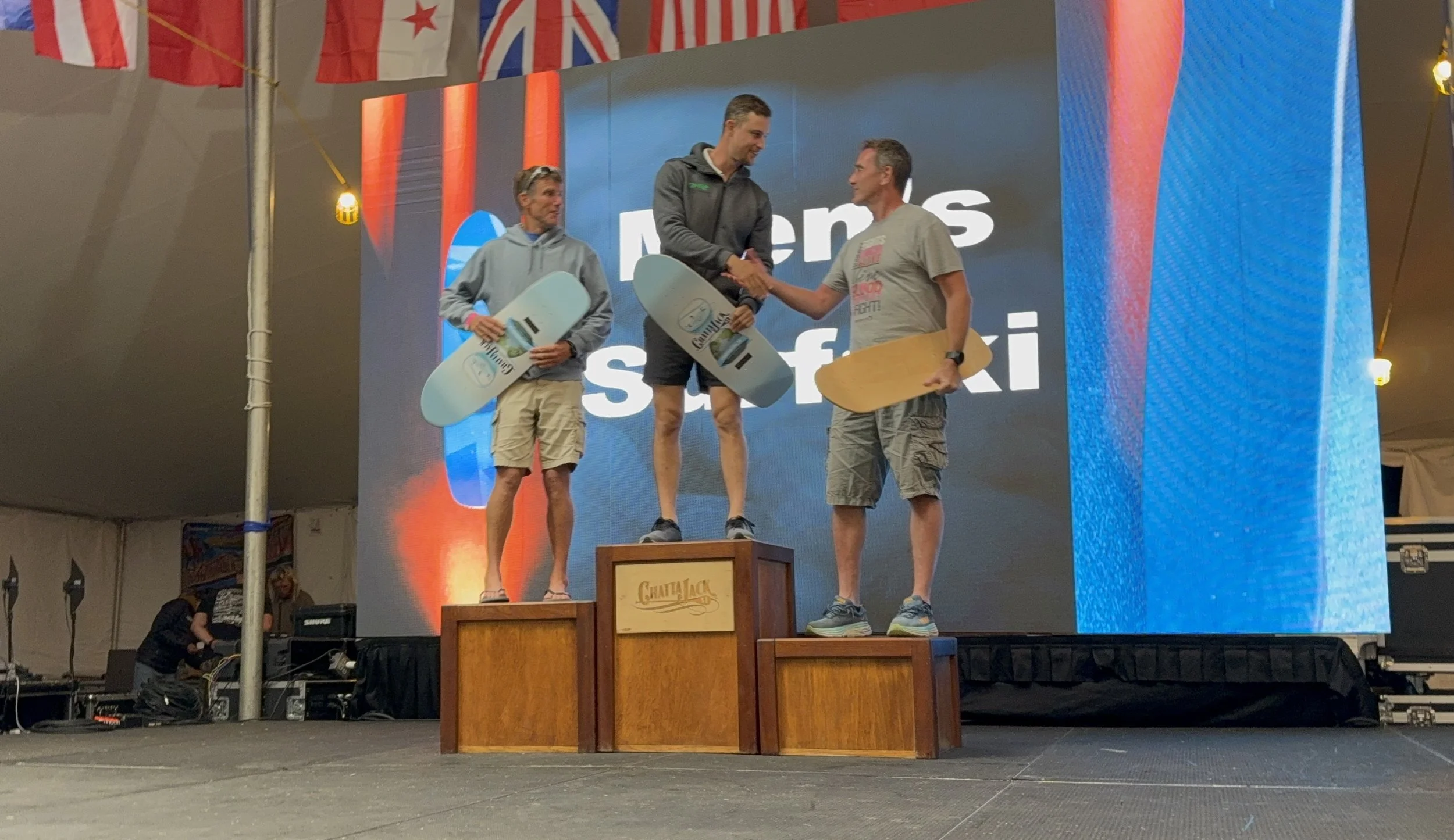
3:53 | 1st Overall Surfski
What a way to wrap up the racing season!
This year was a little different for me. Between the Black Belt Challenge in April, the Blackburn Challenge, ACA Sprint Nationals, and finally Chattajack 31, I had the opportunity to race across some very different distances and disciplines. Each event taught me something that ultimately influenced how I approached Chattanooga.
Black Belt reminded me that I still had a long way to go in developing the efficiency needed to sustain faster speeds at lower heart rates.
At Blackburn, I finished third overall in the 20-mile race. I felt strong in the second half, which gave me confidence in my endurance, but it also reinforced that even in longer events, speed still matters.
Sprint Nationals was my A race for the season. Winning the K1 5K was particularly meaningful, and something stuck with me: We're capable of much more than we think we are.
That mentality carried into Chattajack.
Finding the Motivation
I actually pulled out of Chattajack last year because I wasn't excited about the preparation. At this point in my paddling career, I'm becoming more selective about the events I commit to. If I'm going to race, I want to show up prepared, motivated, and excited about the work required to get there.
That changed in July when Joel Pekosz from Shoreline Paddlesports told me he had a spot locked down for me.
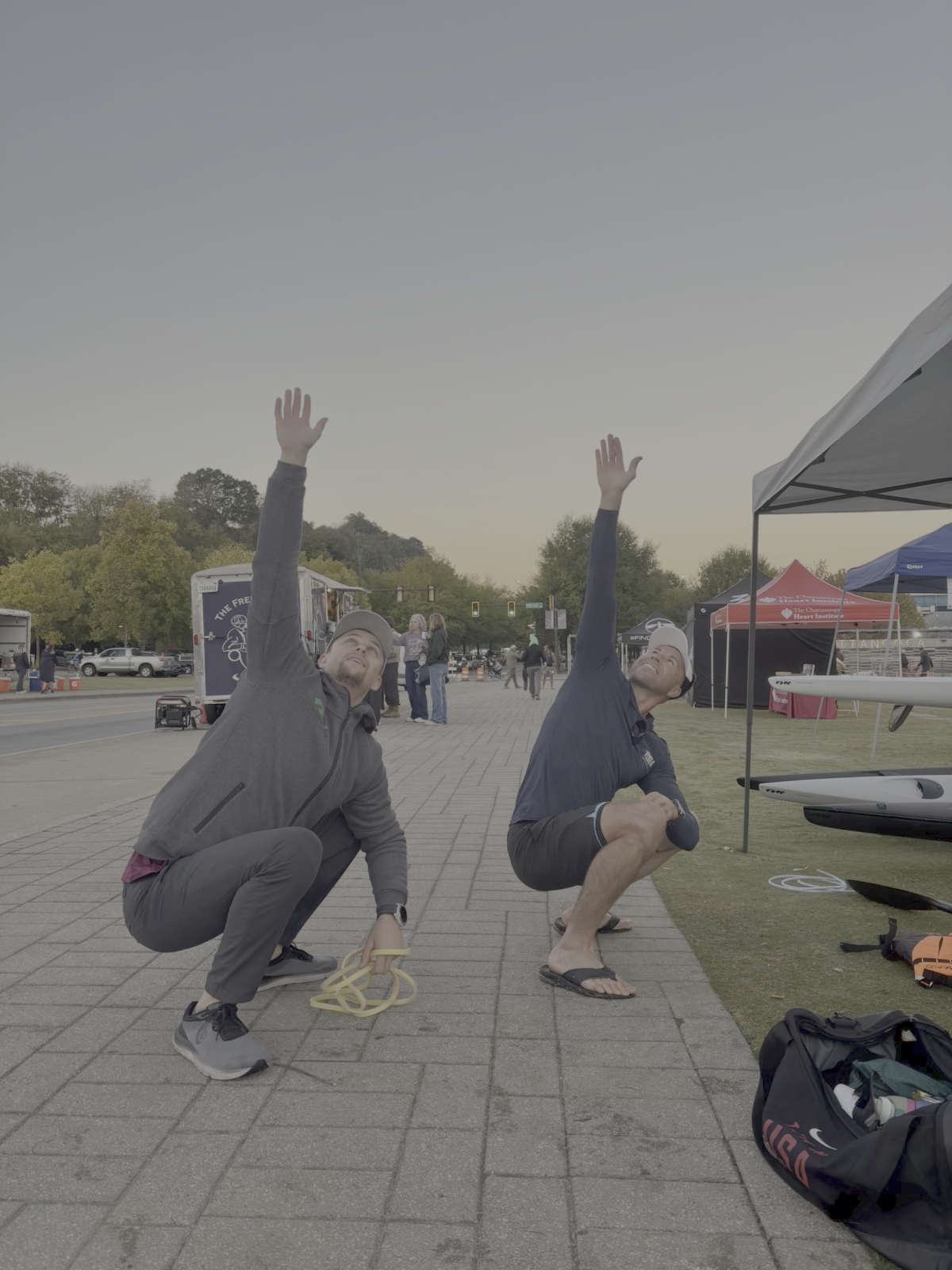
Having Jason Larkin as a training partner for the longer sessions and interval work also made the preparation something I genuinely looked forward to.
Doing More With Less
The theme of my preparation was simple: doing more with less.
With work, family, and everything else going on, there were weeks in the final eight where I only paddled three times.
Rather than worrying about training frequency, I focused on making every session count and targeting the right physiological adaptations at the right time.
I had three boxes I wanted checked before race day:
Durability: Maintain efficient technique for three to four hours without significant form breakdown.
Fueling: Sustain a high carbohydrate intake throughout the effort.
Sustainable power: Produce competitive speed without spending the entire race at or above threshold.
I gradually built up to a 25-mile training paddle and completed several 16–18-mile sessions where the final 6–8 miles became progressively faster.
Some longer sessions incorporated sustained intervals of 12–30 minutes. The objective was to accumulate meaningful work at the intensities I expected to race, including producing speed late in a session when fatigue was already setting in.
Equally important was learning to go genuinely easy when the session called for it. Speed became secondary to the physiological stimulus I was targeting.
Training through the Florida summer meant accepting that heat would sometimes elevate heart rates beyond what I wanted to see. Metrics matter, but they aren't everything. Understanding effort, conditions, and what your body is telling you is equally important.
Sometimes the right workout was a substantial endurance session. Other days, 30 minutes of maintenance work was enough.
Ultimately, I wasn't just trying to build the fitness to finish 31 miles. I wanted the metabolic efficiency and muscular endurance to race those miles.
Race Day — 31 Miles, One Piece at a Time
The start was entertaining.
I went out hard for the first 90 seconds, going toe-to-toe with the four-man surfski, partly just to put on a show!
Then it was time to settle down, recover, and find the right group.
I linked up with Joel and Mike Anthony in their double surfski and stayed with them for most of the race.
Mentally, I divided the course into ten sections of approximately three miles each. Rather than thinking about the entire 31 miles, I only needed to manage the next segment.
The strategy was to conserve as much energy as possible through the early and middle portions, particularly segments two through six.
I wanted to stay below threshold, get my nutrition in during the first two hours, and use the double as a pacing reference.
My fueling strategy was 90 grams of carbohydrate per hour, which I executed as planned, consuming approximately 360 grams over the race.
I also took three 75 mg caffeine doses: one before the start, one around mile 15, and another toward the end. That's 225 mg total.
Based on training, I believed that if I managed the first two hours correctly, I'd have the ability to bring the effort up over the final two.
By around mile 18, I'd done what I set out to do. I'd conserved energy, stayed on top of nutrition, and put myself in a position to start racing more aggressively.
From there, I became more playful with the pace, allowing myself to move into forced low-threshold efforts.
As the current began to fade, I was still able to maintain speed.
I also started thinking about the boats that had gone off in the earlier wave. The goal became to pick them off one at a time while gradually opening a gap on Joel and Mike.
I knew I didn't want to leave the outcome to a sprint finish. A double surfski would almost certainly have more firepower than me over the final few hundred meters.
So I needed to make my move earlier.
Miles 24–27 — Making the Move
This was probably the decisive part of my race.
I pushed hard at from approximately mile 24 to 27 and managed to put around two minutes into Joel and Mike.
That was exactly the kind of effort I'd been preparing for: the ability to raise the intensity after several hours of paddling rather than simply hanging on.
But the final couple of miles were a different story.
For the first time I can remember in a long-distance event, I experienced something that felt like genuine muscular failure.
Cardiovascularly, I was fine. My breathing was controlled, and my technique still felt efficient.
But my trunk and lats were absolutely on fire.
It was a strange sensation. I had the cardiovascular capacity to keep pushing, but the muscles responsible for producing and transferring power were struggling to deliver.
I'd developed the ability to race hard for roughly 26 miles, but the final stretch exposed the limits of my muscular endurance.
At that point, there wasn't much left to do except manage the pain and keep the boat moving.
Crossing the finish line in 3 hours and 53 minutes, first overall in surfski and ahead of all the double surfskis, was a pretty satisfying way to end the day.
Looking Back
What I'm most satisfied with isn't necessarily the result itself, but the preparation that made it possible.
I took the key sessions seriously, accumulated the mileage I could, and executed the interval work at the appropriate intensities and volumes.
The goal was to develop a sustainable paddling speed supported by better metabolic efficiency, and for the most part, that's exactly what happened.
The final miles also showed me there's another level of muscular endurance and power sustainability to develop.
That's part of what keeps this sport interesting. You can spend years racing and training, and there's always something new to learn.
But beyond the training and results, the biggest surprise about Chattajack was the experience itself.
As I get further along in my paddling career, I'm becoming more selective about the races I do. I'm less interested in accumulating results for the sake of it and more interested in experiences that are genuinely worth preparing for.
And Chattajack delivered on that in a way I hadn't anticipated.
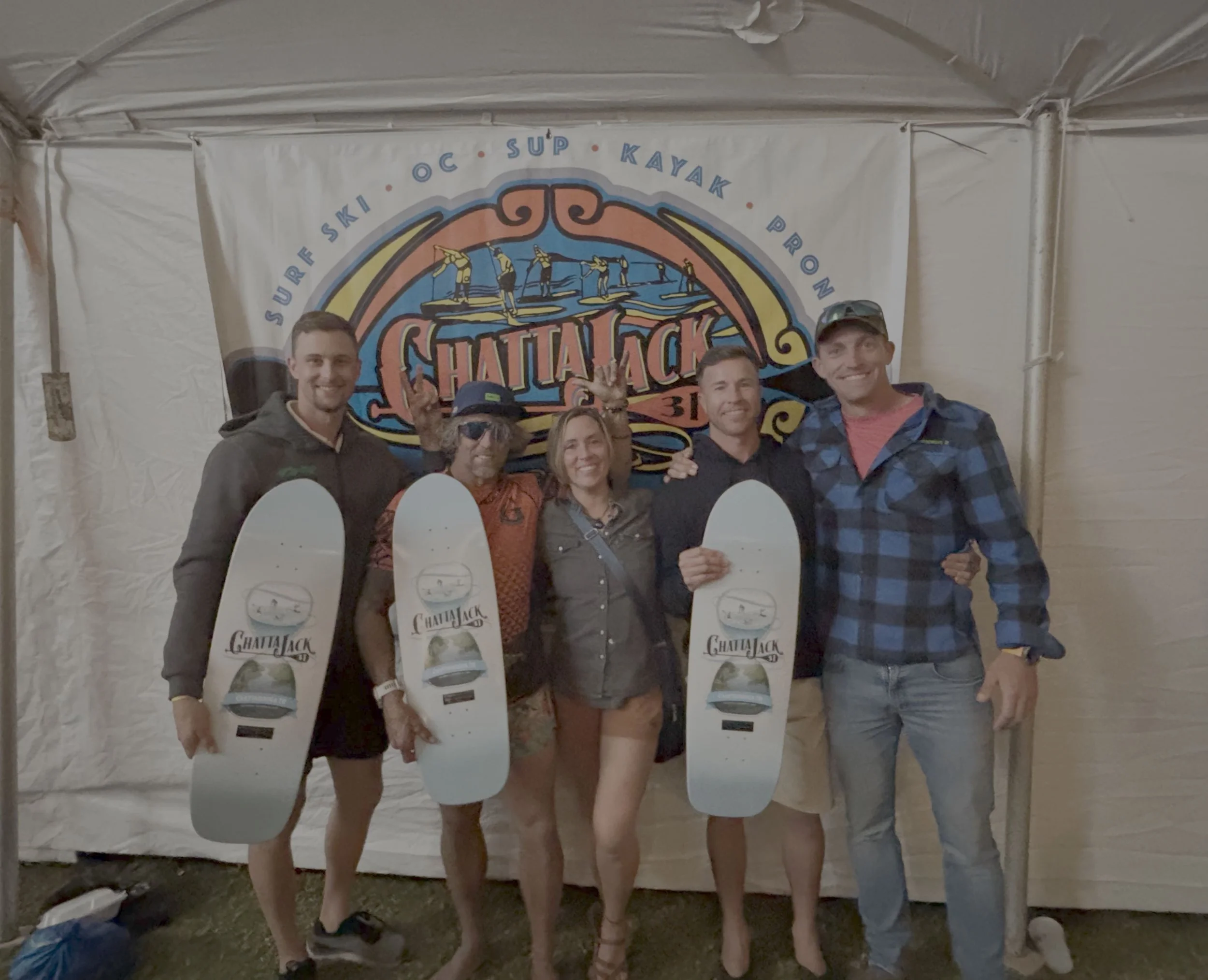
Getting to catch up with so many good friends from over the years, meeting new people, and seeing everyone come together in one place to do something we all love was pretty special.
For all the focus we put on training, pacing, equipment, and results, it's easy to forget that this is really what makes the sport worthwhile.
The competition is great, but the people and shared experiences are what keep bringing us back.
Huge thanks to Joel and the NK team, Jason, my father Vadim, my wife Savannah, and coach Holm — everyone who was part of the preparation and race experience.
Until the next one!